What Is the Basis Trade?
Let’s break it down in everyday terms.
Hedge funds borrow money, typically on a short-term basis, at very low interest rates. They don’t borrow this from a typical bank. Instead, they use a process called “repo financing”, short for repurchase agreements, where they essentially rent money overnight by putting up Treasury bonds as collateral. It’s like pawning something valuable to get a cheap, temporary loan. Repo financing is normally used by banks or institutions to manage cash reserves. Hedge funds are using this tool, intended for liquidity, in a speculative manner.
They use that borrowed money to buy Treasury bonds, which are considered among the safest investments in the world.
At the same time, they place a bet against those same bonds in the futures market by short-selling. “Shorting” or “short selling” simply means they are betting the price will go down. Think of it like borrowing something now to sell it, hoping it becomes cheaper later so you can buy it back at a lower price and pocket the difference. This hedging is supposed to make the trade ‘market neutral,’ meaning it shouldn’t matter if Treasury prices go up or down…as long as the spread behaves as expected.
They earn the small difference between what the bond costs now and what the futures market expects it to be worth later, a spread that might be tiny… unless you do it with massive borrowed money, that’s where the trade gets interesting.
Sounds harmless, right?
Where It Gets Risky: Leverage
This trade only earns a fraction of a percent, unless you multiply it. That’s where leverage comes in..
Leverage means using borrowed money to make a bigger investment than you could with your own cash alone.
40x leverage means for every $1 they put in, they’re borrowing $39.
Some hedge funds may utilize leverage of 100 times or more.
It’s like trying to make a living picking up pennies on a railroad track, except the pennies aren’t yours, you borrowed millions of them, and the train is already coming.
That leverage makes the trade mildly profitable when markets are calm. However, it turns into a disaster waiting to happen when volatility strikes. A slight price movement, a few basis points (one basis point is 0.01%), can wipe out the entire position, triggering forced selling and market panic.
Why This Matters
This trade only works as long as everything stays calm. However, if something suddenly changes, such as a spike in interest rates or rapid selling in the bond market, the entire structure begins to wobble.
And because these trades are highly leveraged, a relatively small market move can cause massive losses quickly.
That happened in March 2020, at the start of the pandemic. The basis trade blew up so fast that the Treasury market, the backbone of global finance, nearly froze. The Fed had to step in with trillions of dollars in emergency support to stop a full-blown collapse. The lesson here? Wall Street doesn’t quit risky habits, it just repackages them and scales them up.
Now, in 2024 and beyond, hedge funds are back to running the same play, only on a larger scale.
Why Retail Investors Should Care
You might be thinking: “What does this have to do with me?”
A lot, actually.
If the Treasury market freezes, everything else breaks: stocks, mortgage rates, pensions, even the dollar.
Hedge funds don’t take the loss alone. When these positions unwind, everyone feels the pain. (Remember the financial crisis of 2007/2008)
This isn’t just another trade, it’s the same kind of quiet, hyper-leveraged bet that nearly broke the Treasury market once before.
You don’t need to trade bonds to feel the impact; we all do, one way or another.
Final Thoughts
The basis trade isn’t illegal. It isn’t even especially exotic. It’s just another example of how the safest markets can hide the riskiest bets when you add leverage and overconfidence.
As working-class traders and investors, we need to keep our eyes open. The real danger isn’t always in the headlines. Sometimes it’s in the quiet corners where the smart money thinks nothing can go wrong.
Next up in the series:
Synthetic Leverage in Derivatives: How Wall Street builds skyscrapers on balance sheets that look empty.
Giveaway Reminder
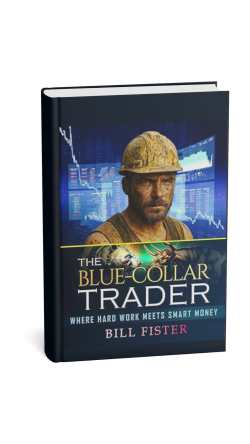
Don’t forget: I’m giving away a signed copy of my book, The Blue Collar Trader: Where Hard Work Meets Smart Money, at the end of this series.
To enter:
Each action = one entry. Follow along each week to earn bonus entries.
The winner will be announced after the final post of the series. Follow along to avoid missing your chance.