In my last post, Pushed Out on the Risk Curve: Why the Stock Market Seems Invincible, For Now, I wrote about how investors have been taking on more risk in search of return. Years of low interest rates, easy credit, and Federal Reserve stimulus have prompted people, funds, and even governments to invest in assets they may not fully understand.
That’s how bubbles form, slowly, quietly, and almost invisibly.
However, the next major risk facing markets might not resemble a traditional bubble at all. Instead, it’s hidden deep within the financial system itself, in how money moves, how trades are financed, and how leverage has evolved since the last crisis.
A Modern Example: The Yen Carry Trade
To understand what I mean, let’s start with something most retail investors had barely heard about: the Yen carry trade.
For years, global funds borrowed Japanese yen at near-zero interest rates and used that cheap money to purchase higher-yielding assets, such as U.S. bonds, tech stocks, and even cryptocurrencies. It was like a worldwide “free money” machine.
But in August 2024, Japan began shifting its monetary policy. The yen strengthened, and those who had borrowed it suddenly faced losses. They had to unwind their positions quickly. That forced selling didn’t just hit currency markets. It spilled into stocks, bonds, and futures, revealing how a single funding strategy can ripple through every corner of the market.
Most retail investors never saw it coming. It happened quietly, beneath the headlines, in the plumbing of global finance.
History Doesn’t Repeat, But It Rhymes
If this sounds familiar, it should. We’ve seen versions of this story before, when complex financial products and easy credit made markets look stable right up until they weren’t.
Back in the mid-2000s, it was CMOs and mortgage derivatives that masked the true level of risk in the housing market. Everyone thought those securities were safe, right up until they blew up. When the assumptions failed, the leverage hidden inside the system was exposed, and it brought the global economy to its knees.
Today, the names have changed, but the pattern remains the same.
Now it’s:
Basis trades in Treasuries
Ultra-short (0DTE) options
Private credit and equity leverage
Off-balance-sheet financing for AI data centers
Different instruments. Same playbook: Short-term funding. Hidden leverage. Sudden unwind.
Every financial era has its own way of stretching for yield, and every time, when the tide turns, the same truth surfaces: the system is more fragile than it looks.
What’s Coming in This Series
Over the next several weeks, I’ll break down eight forms of invisible leverage shaping today’s markets:
Hedge funds’ Treasury “basis trade”
Synthetic leverage in derivatives
The quiet boom in private credit
The hidden debt inside private equity
The explosion of 0DTE options
Stablecoins and money-market flows
Commercial real estate’s slow unraveling
Off-balance-sheet financing for AI data centers
Each post will unpack one risk in plain language, what it is, why it matters, and how it could impact ordinary investors.
The Bigger Picture
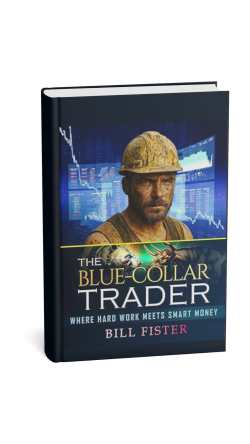
In my book The Blue Collar Trader: Where Hard Work Meets Smart Money, I focus on helping working people understand how markets really move, and how to trade with discipline and awareness.
My next book, The American Dream Derailed: How Debt and Deception Shape Our Lives (title still in progress), builds on that mission. It explores how the same hidden leverage that fuels financial markets also mirrors the debt traps faced by everyday Americans.
This new blog series bridges those two ideas. It’s about learning how the risks we don’t see, whether in Wall Street’s funding mechanisms or our personal finances, often carry the greatest cost.
Final Thoughts
Markets may look strong today. But strength built on leverage is an illusion; it lasts only as long as the funding holds.
Understanding where that leverage hides is the first step toward protecting what you’ve worked for.
Next week, we’ll begin with the first risk in the series: the Treasury basis trade, which has shown how hedge funds have transformed the world’s safest asset into a leveraged time bomb.
Blue Collar Trader Giveaway
To kick off the Invisible Leverage series, I’m giving away a signed copy of The Blue Collar Trader: Where Hard Work Meets Smart Money!
How to enter:
Like or share this post on Facebook.
Comment your thoughts about hidden leverage or the series below.
Get in touch with me directly on bluecollartraders.com, send me a message and let me know what you think about the series or how it relates to your own trading journey.
That’s it! You’ll be entered to win, and I’ll announce the winner at the end of this series.
This giveaway isn’t about marketing, it’s about starting a conversation. My goal is to help the working class understand what truly drives markets and make smarter, more informed financial decisions.
Because knowledge is leverage, too.