The story of Ronald Read tends to surprise people, and sometimes unsettle them.
Born in 1921, Read lived what most would consider a modest life. He worked as a janitor and later at a gas station. He dressed simply. Drove an old car. Kept a low profile. To everyone around him, he looked like an ordinary working man getting by.
When he passed away in 2014 at age 92, the town discovered something no one expected: Ronald Read had quietly accumulated an $8 million fortune.
He donated $6 million to a local hospital and $2 million to the public library.
The story resurfaced in a recent Facebook post, and the reactions were telling.
The discussion quickly moved away from how he built the wealth.
Instead, it centered on why he didn’t spend it all, travel, or drive a fancy car, as if those were the only valid measures of a life well lived.
The Assumption That Wealth Must Be Visible
The most common criticism of Ronald Read’s story is this:
“What’s the point of money if you never enjoy it?”
It’s an understandable reaction, but it reveals how deeply we’ve been conditioned to equate spending with living.
Ronald Read didn’t build wealth through luck, inheritance, or a high income. He did it through:
He rarely sold. He let compounding do the work.
That wasn’t deprivation.
That was intention.
And it raises a more important question:
Who gets to decide what a well-lived life looks like?
A Different Kind of Freedom
While on vacation recently, I test-drove a new Corvette.
It was fast. Powerful. Beautifully engineered. Coming out of a corner, I barely touched the gas, and the car got a little sideways, the kind of performance that demands respect.
Years ago, that experience would have triggered something deeper than excitement. It would have felt like motivation. Like something I should be chasing.
This time, it didn’t.
I enjoyed the drive. I appreciated the car. And when I stepped out, I felt no pull to own it.
That moment mattered more than the car itself.
When Debt Is Framed as Motivation
Earlier in my career, someone who brought me into the financial industry once suggested I test-drive a brand-new Dodge Viper.
His reasoning was simple: if I wanted the car badly enough, the financial pressure would force me to work harder and sell more.
When I explained I couldn’t afford it, he encouraged me to buy it anyway.
To him, debt wasn’t a risk; it was leverage.
Pressure wasn’t a warning sign; it was fuel.
That mindset is far more common than people realize. It’s just usually packaged as ambition, hustle, or success.
What Financial Independence Actually Means
To be clear: I could afford the Corvette.
I had to pre-qualify just to test drive it.
I could even pay cash if I were willing to exhaust liquidity.
But real financial independence isn’t about whether you can buy something.
It’s about whether you need to.
Financial independence means:
Money is no longer a constant source of fear
Setbacks don’t trigger panic
Necessities don’t require trade-offs
Choices aren’t dictated by debt obligations
It means you don’t have to choose between:
Paying the electric bill or buying groceries
Eating healthy or staying on budget
Stability today or security tomorrow
It’s measured by net worth, resilience, and choice, not appearances or leverage.
Did Ronald Read “Miss Out”?
Here’s the part many people miss.
Ronald Read didn’t fail to live.
He lived according to his own values, not public expectations.
He didn’t need status to validate him.
He didn’t need pressure to motivate him.
He didn’t need consumption to feel successful.
He lived on his own terms. and left behind something of lasting value.
That’s not sad.
That’s rare.
The Car Wasn’t the Point
The Corvette didn’t tempt me because it wasn’t tied to identity.
I didn’t feel like it proved anything.
I didn’t feel like it elevated me.
I didn’t feel like I needed financial pressure to justify wanting it.
Real freedom isn’t walking into a dealership and buying a $60,000 car.
Real freedom is walking out knowing you could, and choosing not to, without internal conflict.
Ronald Read understood that.
Most people never do.
The Bigger Lesson for Working People
The goal isn’t to accumulate money for its own sake.
The goal is to understand money, risk, and systems well enough that they no longer control your decisions.
So you can:
Live comfortably
Protect yourself and your family
Plan for the future without fear
Avoid lifelong debt and exhaustion
Build something that lasts
That’s what real financial independence looks like.
And sometimes, the clearest sign you’re getting there isn’t what you buy,
it’s what no longer pulls you.
A Few Common Questions This Story Raises
**Did Ronald Read really never enjoy his money?**
There’s no evidence that he felt deprived. Enjoyment looks different to different people, and Read appeared content living simply while building long-term security.
**Is financial independence about not spending money?**
No. It’s about having the ability to spend without fear or pressure, and without sacrificing future stability.
**Is buying a luxury car a bad financial decision?**
Not inherently. It depends on liquidity, long-term goals, and whether the decision is driven by choice or by emotional pressure.
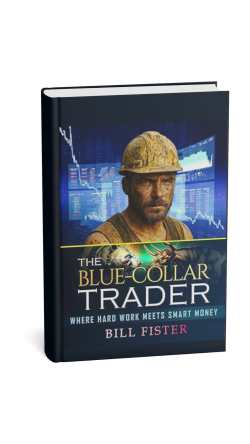
Bill Fister is the author of The Blue-Collar Trader: Where Hard Work Meets Smart Money and The American Dream Derailed: How Debt & Deception Shape Our Lives and How We Reclaim Control.
With over 30 years of experience navigating financial markets while working full-time, he focuses on discipline, risk management, and helping working-class individuals understand money, risk, and systems well enough to make informed decisions, without relying on leverage, hype, or blind trust in financial solutions that promise efficiency without explaining risk.