Most people hear the word stablecoin and assume it’s just another cryptocurrency thing, something separate from the real financial system.
That assumption is wrong.
Stablecoins have quietly become a bridge between traditional finance and crypto markets. And in the process, they’ve created a new form of invisible leverage, one that moves fast, crosses borders instantly, and can stress the system in ways most people never see.
What Is a Stablecoin (In Plain English)?
A stablecoin is a digital token designed to maintain a stable value, typically pegged to the U.S. dollar.
In theory:
The most common stablecoins include names like USDT (Tether) and USDC.
They’re widely used because they allow money to move instantly, 24/7, without banks.
But here’s the catch…
Where the Risk Actually Lives
Stablecoins don’t just sit in wallets. The companies behind them don’t hold piles of cash in vaults.
Instead, most of that backing money is invested, often in:
In other words, stablecoins are deeply tied to the same short-term funding markets that keep Wall Street running.
That means stablecoins aren’t just a crypto issue anymore. They’re now connected to the same money markets that banks, hedge funds, and the government rely on every day.
How Money-Market Flows Create Hidden Leverage
Here’s where invisible leverage enters the picture.
When confidence is high, the supply of stablecoins grows. Money flows in, tokens get issued, and backing assets get purchased.
But when confidence cracks, even briefly, the process reverses:
Investors rush to redeem stablecoins
Issuers must raise cash quickly
Assets are sold fast, sometimes at unfavorable prices
This creates forced selling, not because fundamentals changed but because liquidity is demanded immediately.
It’s similar to a bank run, like the one shown in It’s a Wonderful Life, where everyone rushes to withdraw their money at once. The difference is this happens faster, digitally, and with far less oversight.
Why This Matters Beyond Crypto
Money-market funds and short-term Treasuries are supposed to be the safest, most stable parts of the system.
But when stablecoin redemptions spike, they can:
Drain liquidity from money markets
Pressure short-term interest rates
Force selling in Treasuries
Spill volatility into stocks and credit
This isn’t theoretical.
We saw glimpses of this stress during:
Each time, markets assumed the issue was contained.
Each time, the systems that quietly move money behind the scenes, money markets, short-term lending, and liquidity, were stressed and disrupted.
Why This Is a Form of Invisible Leverage
There’s no margin account here. No visible debt.
But the leverage comes from speed and confidence.
Stablecoins compress enormous amounts of capital into instruments that promise instant redemption, while the backing assets are only liquid under normal conditions.
That mismatch is leverage.
And when confidence breaks, the unwind happens all at once.
Why Retail Investors Should Care
You might be thinking:
“I don’t own crypto, why should I worry?”
Because:
Money-market funds affect mortgage rates
Treasury markets affect pensions and retirement accounts
Liquidity shocks don’t stay isolated
When fast money pulls out, everyone pays the price.
The risks aren’t obvious or headline-grabbing. They’re hidden in how money quietly moves through the system.
The Bigger Pattern
This fits the same pattern we’ve seen throughout this series:
Stablecoins didn’t invent these risks.
They just accelerated them.
Final Thoughts
Stablecoins were designed to enhance financial efficiency.
In some ways, they succeeded.
But efficiency without resilience creates fragility.
When money can move instantly, but safety depends on calm markets, stability becomes an illusion.
The danger isn’t a crash you can see coming.
It’s the quiet dependency you don’t notice until it breaks.
Giveaway Reminder
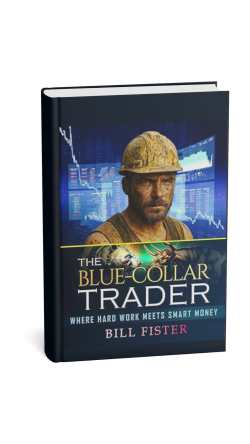
I’m giving away a signed copy of my book,
The Blue-Collar Trader: Where Hard Work Meets Smart Money,
at the end of this series.
To enter:
Each action counts as one entry.
Follow along, bonus entries will be available as the series continues.