Commercial real estate doesn’t collapse overnight.
It doesn’t crash with headlines or panic selling.
It doesn’t show up as a sudden market shock.
Instead, it unravels slowly, quietly, loan by loan, building by building.
And right now, that slow unraveling is already underway.
Why Commercial Real Estate Looks “Fine” — For Now
If you glance at the surface, commercial real estate (CRE) doesn’t look like it’s in crisis.
Buildings are still standing.
Leases still exist.
Prices haven’t collapsed across the board.
But underneath that calm surface, pressure is building.
Office buildings are emptier than they were before 2020.
Retail space has shifted permanently.
Remote and hybrid work changed demand in ways that won’t fully reverse.
The problem isn’t usage alone; it’s debt.
The Real Issue: Refinancing Risk
For years, commercial real estate thrived on cheap money.
Property owners borrowed at low interest rates, often using:
That worked when rates were near zero.
It doesn’t work anymore.
As loans come due, many owners now face a hard reality:
This isn’t a crash problem, it’s a refinancing problem.
Why This Is Another Form of Invisible Leverage
Here’s where it fits into the Invisible Leverage theme.
Commercial real estate used:
The debt didn’t disappear; it was just pushed forward.
Now, as refinancing approaches, that leverage is being exposed.
And because this debt sits across:
Banks
Private credit funds
Pension funds
Insurance companies
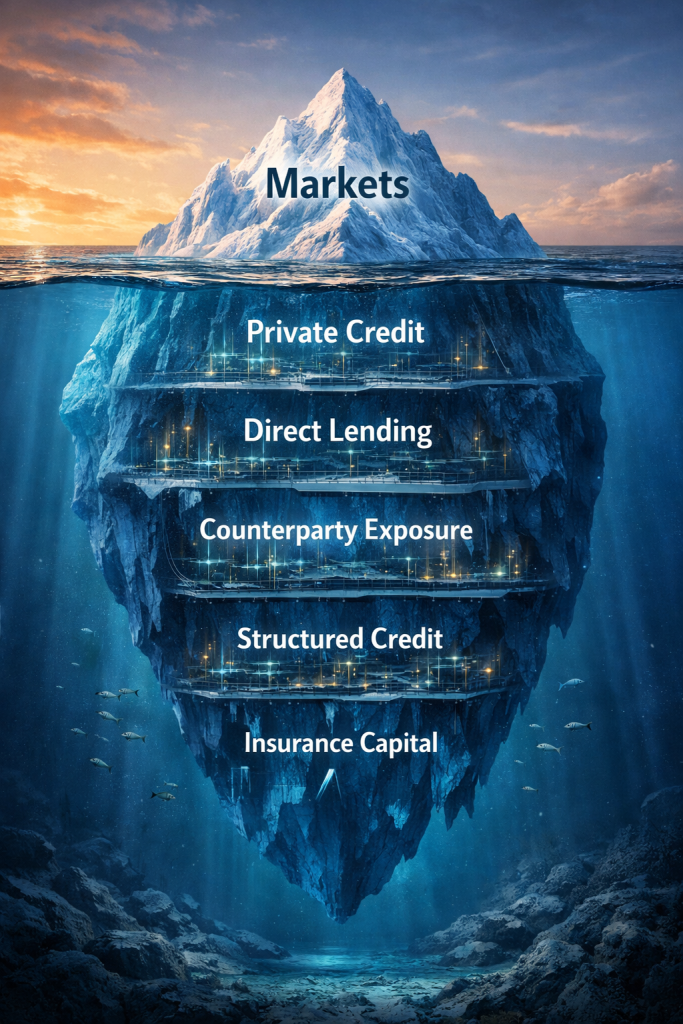
The risk isn’t isolated.
It’s spread quietly throughout the system.
Why Losses Don’t Show Up All at Once
Recent data backs this up. Office vacancy rates have climbed above 20% nationally, with some major cities nearing 30%. Office values are down more than 20% since 2019, while other sectors like retail and industrial have held up better. That uneven pressure is exactly why this unwind feels slow, and why the risk is easy to miss.
Commercial real estate doesn’t get marked to market every day like stocks.
Losses show up when:
That’s why this feels slow.
But slow doesn’t mean safe.
It means delayed.
Why This Matters to Working People
You might be thinking:
“I don’t own office buildings. Why should I care?”
Because commercial real estate affects:
Local banks
Pension funds
Insurance portfolios
Municipal tax revenue
Employment
When buildings lose value:
Cities collect less tax
Services get cut
Banks tighten lending
Job growth slows
And when refinancing fails, properties don’t just disappear, they get handed to lenders, restructured, or written down.
That process ripples outward.
A Familiar Pattern
This isn’t new behavior.
We’ve seen it before:
The difference this time is where it’s happening.
Instead of housing, it’s offices, retail, and commercial space.
Instead of obvious defaults, it’s quiet restructurings.
Final Thoughts
Commercial real estate isn’t about to explode.
It’s about to grind.
Loan by loan.
Building by building.
Balance sheet by balance sheet.
And as this slow unwind continues, it adds stress to a financial system already carrying more hidden leverage than most people realize.
The danger isn’t what collapses suddenly.
It’s what weakens quietly until something else breaks.
Giveaway Reminder
I’ll be giving away a signed copy of my book,
The Blue-Collar Trader: Where Hard Work Meets Smart Money,
at the end of this series.
To enter:
Each action counts as one entry.