Most people never think about private equity.
It sounds like something that only happens in mahogany-paneled boardrooms — wealthy investors, billion-dollar firms, and companies with names you’ve never heard of.
But private equity touches nearly every corner of working-class life:
The grocery store you shop at
The nursing home your parents rely on
The fast-food chain down the street
The hospital in your town
The landlord who owns your apartment
Even the school your kids attend
And the risk isn’t in the companies themselves, it’s in the hidden debt private equity loads onto them.
Let’s break this down in plain English.
How Private Equity Really Works (Blue Collar Version)
Private equity firms don’t buy companies the way you and I would.
They don’t walk in with a check.
They use something called a leveraged buyout (LBO):
They find a company they want.
They take out massive loans to buy it.
But here’s the twist: The company, not the private equity firm, is responsible for paying those loans back.
Imagine buying a house and handing the mortgage to the house itself.
That’s what private equity does.
Why This Creates Hidden Risk
That giant pile of debt doesn’t show up on the private equity firm’s books.
It shows up on the company’s.
And that debt changes everything:
Prices get raised
Staff gets cut
Maintenance gets delayed
Pension obligations get “restructured”
Fees get added everywhere
Quality drops
Long-term stability disappears
The real risk is that these heavily indebted companies become incredibly fragile.
One downturn… one bad quarter… one shift in consumer behavior… and they can’t handle the debt.
Then the layoffs start.
Stores close.
Services collapse.
Communities suffer.
And the workers?
They’re the last to know and the first to feel it.
Why Hidden Debt Is Exploding Right Now
We’re in a new era of private equity. The firms have become massive, and so has the leverage.
Here’s what’s changed:
1. Rising interest rates: Debt has become far more expensive. Companies that borrowed heavily when money was cheap now face, or soon will face, crushing payments as their loans reset or come due.
2. Slowing growth: If revenue dips even a little, the math stops working.
3. Pandemic aftermath: Nursing homes, hospitals, retail, and logistics companies, many owned by private equity, are still weakened.
4. Shadow financing: Debt is suddenly more expensive. Many companies loaded with cheap loans now face crushing payments.
Private equity increasingly relies on private credit, an unregulated lending market with little transparency. This is a system-wide pressure cooker.
How We Got Here: The Post-2008 Wall Street Housing Grab
After the financial crisis, millions of families lost their homes to foreclosure.
But instead of those homes going back to working Americans, something very different happened.
Private equity firms, many of the same players who helped trigger the crisis, were suddenly armed with liquidity and access to ultra-cheap financing supported by bailouts. While families were shut out of the mortgage market, Wall Street wasn’t.
They used this moment to buy tens of thousands of foreclosed homes in bulk, often at steep discounts. Those homes were turned into rental properties, securitized, and packaged into a brand-new Wall Street asset class.
This move helped drive:
The irony?
Wall Street crashed the housing market, got bailed out, then used the recovery to buy the houses they helped people lose.
This is invisible leverage disguised as “market recovery.”
Real-World Examples (Simple and Relatable)
Toys “R” Us
Loaded with billions in debt.
Couldn’t survive.
Employees got nothing.
Nursing Homes
Private equity-owned homes have:
Housing & Rent
Private equity firms bought huge numbers of homes and apartment buildings. Debt + profit targets force them to raise rents aggressively, add fees, and evict faster.
This is a major reason working families are priced out, even when wages stay flat.
Grocery Stores
Many grocery chains are owned by private equity. Heavy debt loads mean higher prices, fewer employees on the floor, and cuts to quality, costs passed straight to shoppers already struggling.
When private equity fuels its profits with debt, the everyday result is predictable: higher housing costs, higher rents, higher grocery bills, and lower stability for the people who already feel stretched the most. This is private equity’s hidden debt hitting the working class directly.
Private equity isn’t about “fixing” companies.
It’s about extracting value before the debt blows them up.
Where the Hidden Leverage Actually Is:
Most people don’t realize how far this reaches:
Private equity funds borrow money
Their portfolio companies borrow money
Their financing vehicles borrow money
And the lenders are often private credit funds…
Which are also owned by private equity
It’s leverage on top of leverage on top of leverage.
It’s like a household paying bills with credit cards; it works for a while, until the interest piles up and one bad month pushes everything over the edge.
Why Retail Investors Should Care
Even if you never touch private equity, you’re still connected to it:
Your 401(k) or pension may invest in PE funds
Your job may be at a company owned by PE
Your rent might go to a PE-owned landlord
Your hospital or grocery store might be backed by PE loans
A collapse in these companies can easily spill into stocks, credit markets, and the real economy
Private equity bets big, and when the bet goes wrong, everyone else pays the price.
If this sounds familiar, it should. Private equity isn’t the only place where hidden leverage lives. Big Tech is now using its own version of off-balance-sheet financing to build the next generation of AI data centers. The scale is massive, the complexity is growing, and the risk, as always, is hiding in plain sight. We’ll unpack this in the final part of the Invisible Leverage Series.
Final Thoughts
The hidden debt inside private equity isn’t just a financial issue. It’s a working-class issue.
It affects wages, prices, services, communities, and stability. And because the risk is tucked away inside layers of private contracts, most people never see it until the cracks start forming.
This is invisible leverage at its most dangerous, the kind that hides inside everyday life.
Giveaway Reminder
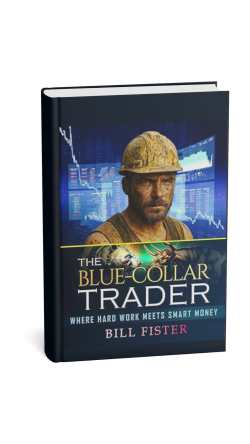
Don’t forget! I’m giving away a signed copy of my book,
The Blue Collar Trader: Where Hard Work Meets Smart Money,
when the series ends.
To enter:
✔️ Comment “Blue Collar Trader”
✔️ OR message me at bluecollartraders.com
Each action = one entry. More bonus entries are coming.