The Credit Card Trap: Why Paying Off High-Interest Debt Should Come First

The data is in: credit card delinquencies are at a 15-year high, yet unemployment remains low. This suggests the “debt trap” isn’t a personal failure of willpower—it’s a systemic gap between the cost of living and stagnant wages. In this article, I break down why eliminating 20% revolving debt is actually the highest-return, lowest-risk “first investment” you can make, and provide a 5-step priority shift to reclaim control of your financial system before you ever place a trade.
Real-World Examples of Invisible Leverage: What Blue Owl and Jefferies Reveal About Private Credit Risk
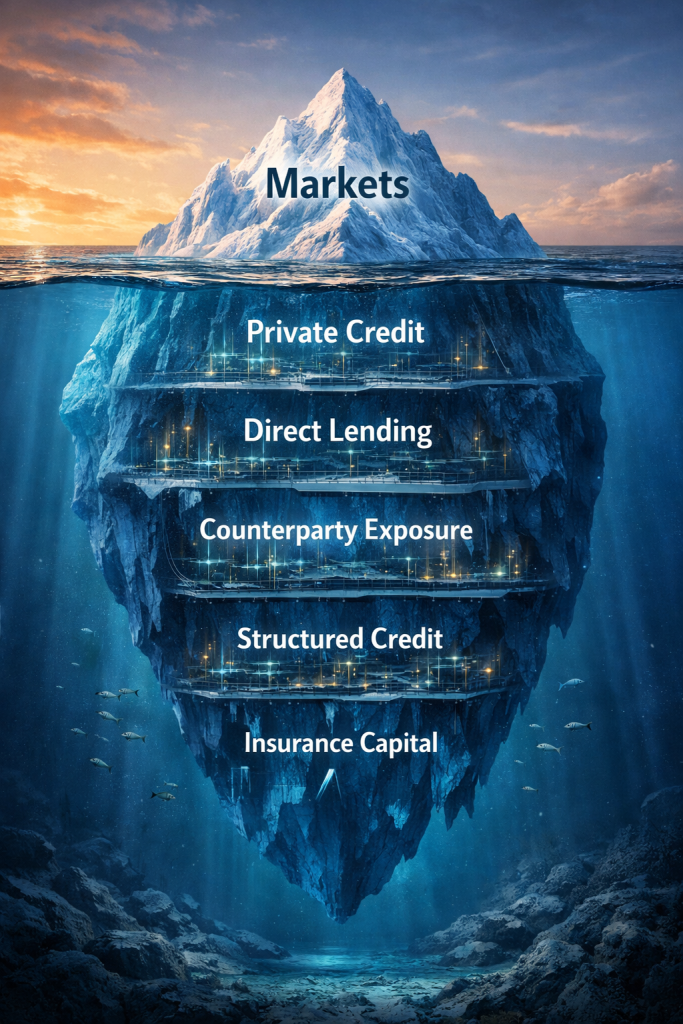
The private credit market has exploded in size over the past decade, but much of the risk within it remains hidden. Through what I call “invisible leverage,” structural vulnerabilities can build quietly across interconnected systems. This article breaks down how that risk develops and what it could mean when conditions shift.
Invisible Leverage: Commercial Real Estate’s Slow Unraveling (Part 7 of the Invisible Leverage Series)

Commercial real estate isn’t collapsing all at once — it’s weakening slowly through refinancing pressure, rising interest rates, and hidden leverage built during years of cheap money. This article explores why the real risk in commercial real estate may not be a sudden crash, but a slow financial unwind spreading quietly through banks, pensions, lenders, and the broader economy.
Invisible Leverage: Stablecoins and Money-Market Flows (Part 6 of the Invisible Leverage Series)

Stablecoins are often viewed as just another part of the crypto world, but they’ve quietly become deeply connected to traditional finance and money markets. This article explores how stablecoins create a new form of invisible leverage through liquidity, confidence, and short-term funding markets — and why disruptions in crypto can now ripple into the broader financial system far faster than most people realize.